
Sports Science · Topic 1
Understanding fitness & human performance
What fitness actually is, how we measure it, and what those numbers can — and cannot — tell us about an athlete.
The theory
Fitness is not one thing. It is a set of separate qualities, and being excellent at one says almost nothing about the others. A marathon runner and a shot putter are both extremely fit — just for completely different demands.
Sports scientists split fitness into health-related components, which every human benefits from, and skill-related components, which decide how well you perform a task. Performance is what happens when those physical qualities meet technique, tactics and psychology on the day.
We test so we can make decisions: to set a baseline, to find weaknesses, to monitor progress, to guide return from injury and to motivate. A test with no decision attached to it is just a number.
Health-related components
Cardiovascular endurance
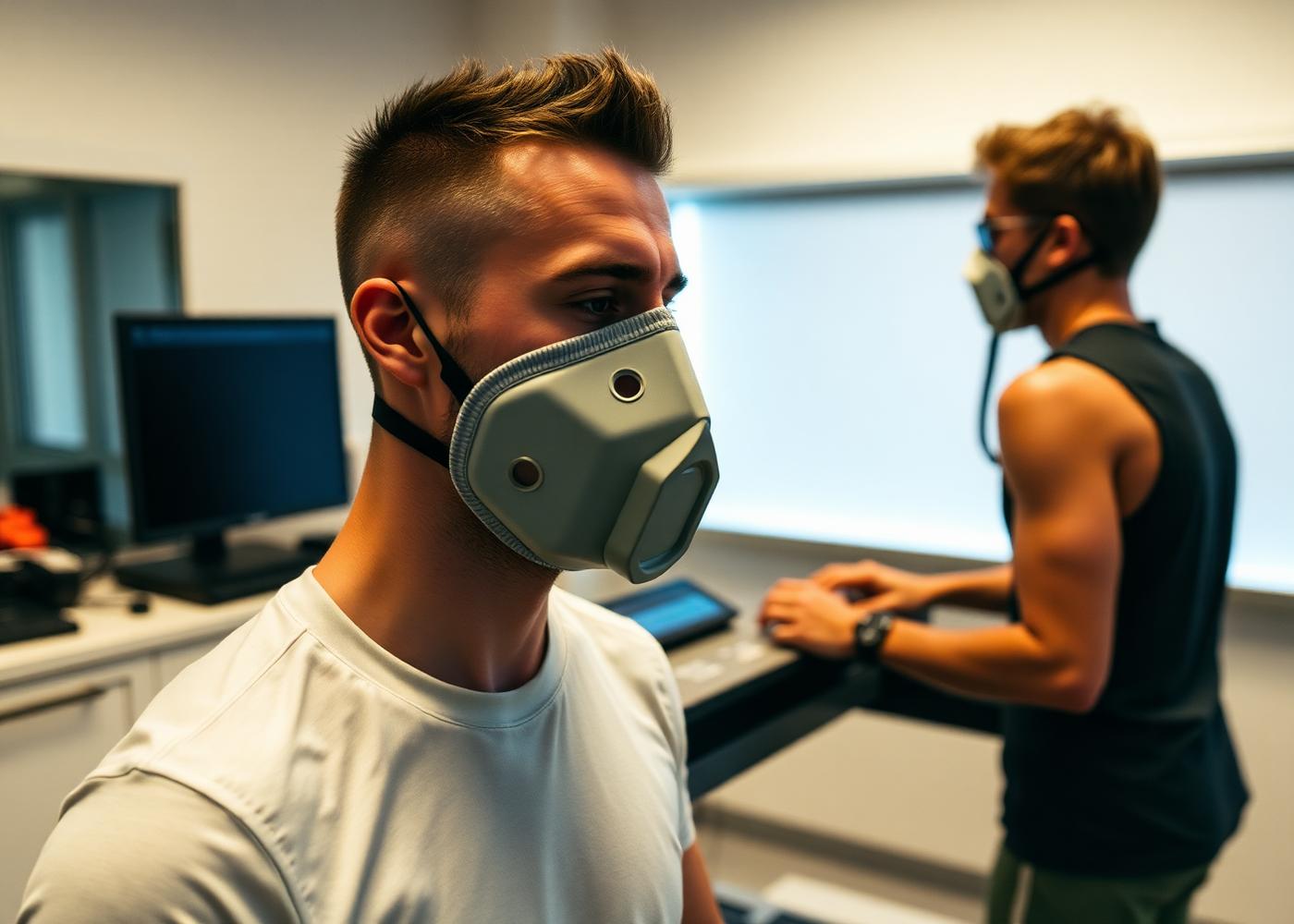
The ability of the heart, lungs and blood vessels to deliver oxygen to working muscles over time. Measured by VO2 max.
Muscular strength
The maximum force a muscle or muscle group can produce in a single contraction (1RM).
Muscular endurance
The ability to repeat contractions, or hold one, without fatiguing.
Flexibility
The range of motion available at a joint — determined by joint structure, muscle length and tissue elasticity.
Body composition
The relative proportion of fat mass to lean mass. A profile, not a judgement — and never the whole picture.
Skill-related components
Speed
How quickly you cover a distance or move a body part.
Power
Strength × speed. The currency of jumping, throwing and sprinting.
Agility
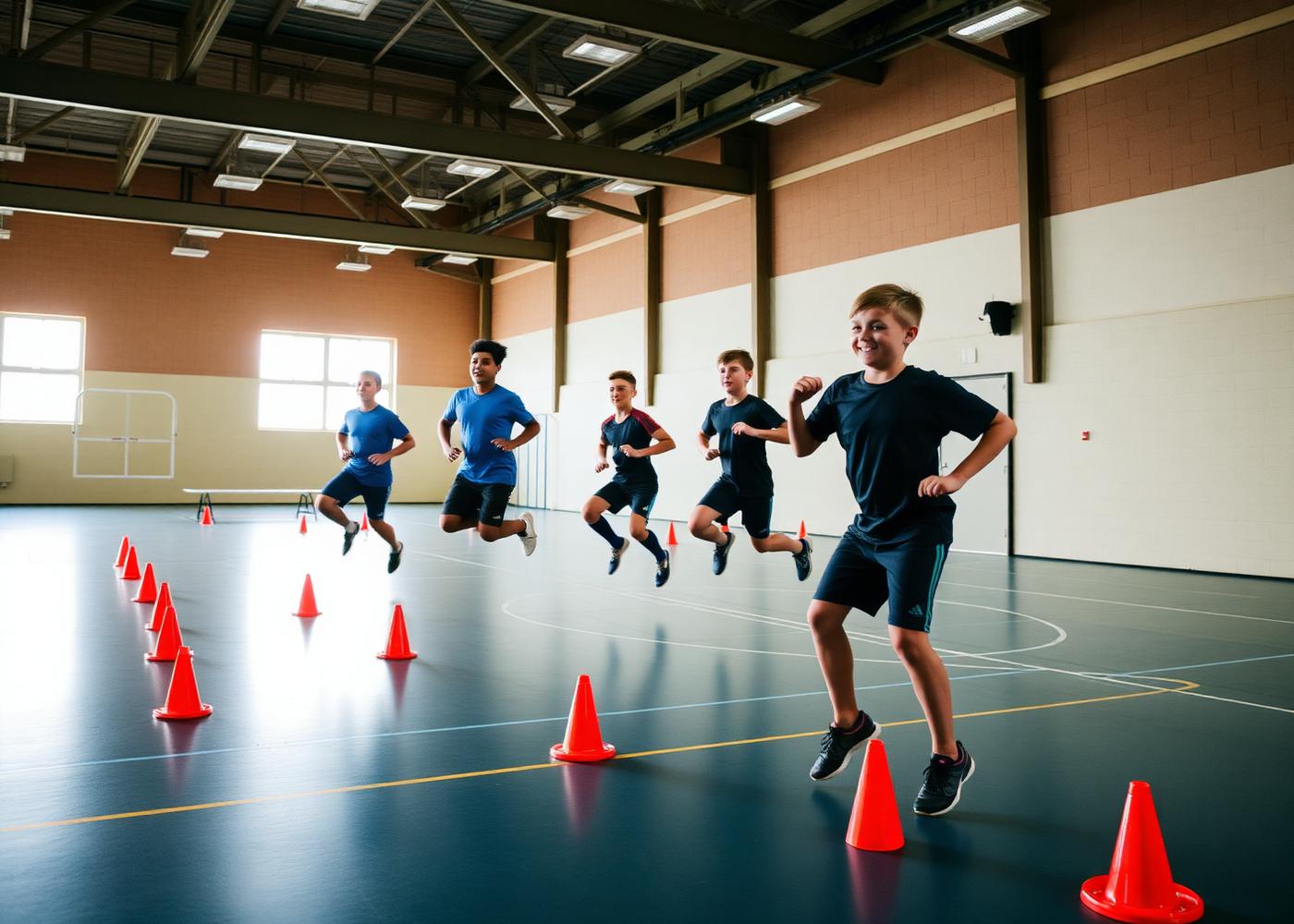
Changing direction quickly while keeping control and balance.
Balance
Maintaining the centre of mass over the base of support — static or dynamic.
Coordination
Using two or more body parts together smoothly and accurately.
Reaction time
The gap between a stimulus and the start of your response.
Fitness testing
A useful test is valid (measures the right thing), reliable (repeatable) and practical (affordable, safe, possible with the equipment and time you have). Follow the protocol exactly, every time.
Cardiovascular endurance
Multi-stage fitness test (bleep test)
20 m shuttles to a bleep that gets progressively faster. Score = level and shuttle, converted to a predicted VO2 max.
Flexibility
Sit and reach
Seated, legs straight, reach forward along a box. Measured in cm past the toes. Warm up first — cold tissue scores badly.
Anaerobic power
Vertical jump (Sargent)
Standing reach subtracted from jump reach. Best of three attempts with full recovery between.
Agility
Illinois agility run
A timed cone course of sprints, turns and weaves. Times to 0.01 s, same surface and footwear each time.
Muscular strength
Handgrip dynamometer
Maximal squeeze, elbow at 90°. Recorded in kg, best of three, dominant and non-dominant hands.
Muscular endurance
One-minute press-up / sit-up
Maximum correct repetitions in 60 seconds. Technique standards must be identical every retest.
Entry quiz
Fitness & human performance — Topic 1 quiz
1 / 8Which of these is a skill-related component of fitness?
Tasks
Task 1 — Personal fitness profile
Complete one test for each health-related component. Record raw scores, compare them to normative tables for your age and sex, and identify your two strongest and two weakest components.
Task 2 — Test design & justification
Choose a sport and a position. Select four tests that best reflect its demands. For each, justify validity, reliability and practicality in 60–80 words.
Task 3 — Reliability investigation
Run the same test on a classmate twice, one week apart, controlling as many variables as you can. Report both scores, the % difference, and the sources of error you could not control.
Task 4 — Performance profile poster
Build a radar chart of an elite athlete's fitness profile using published data. Explain why their profile looks the way it does.
Go deeper
- Look up the VO2 max records for cross-country skiers and cyclists — why are they the highest ever recorded?
- Watch a decathlon and rank the ten events by which component of fitness dominates each one.
- Find out how wearables estimate VO2 max from resting heart rate. How accurate is it really?
- Test your own reaction time online, then again after two minutes of hard exercise. Explain the difference.