
PE Corner · Secondary · Unit 1
Dance
Vocabulary, where hip hop and salsa come from, how to rehearse and perform, and a quiz to open the unit. New units are published here through the year.
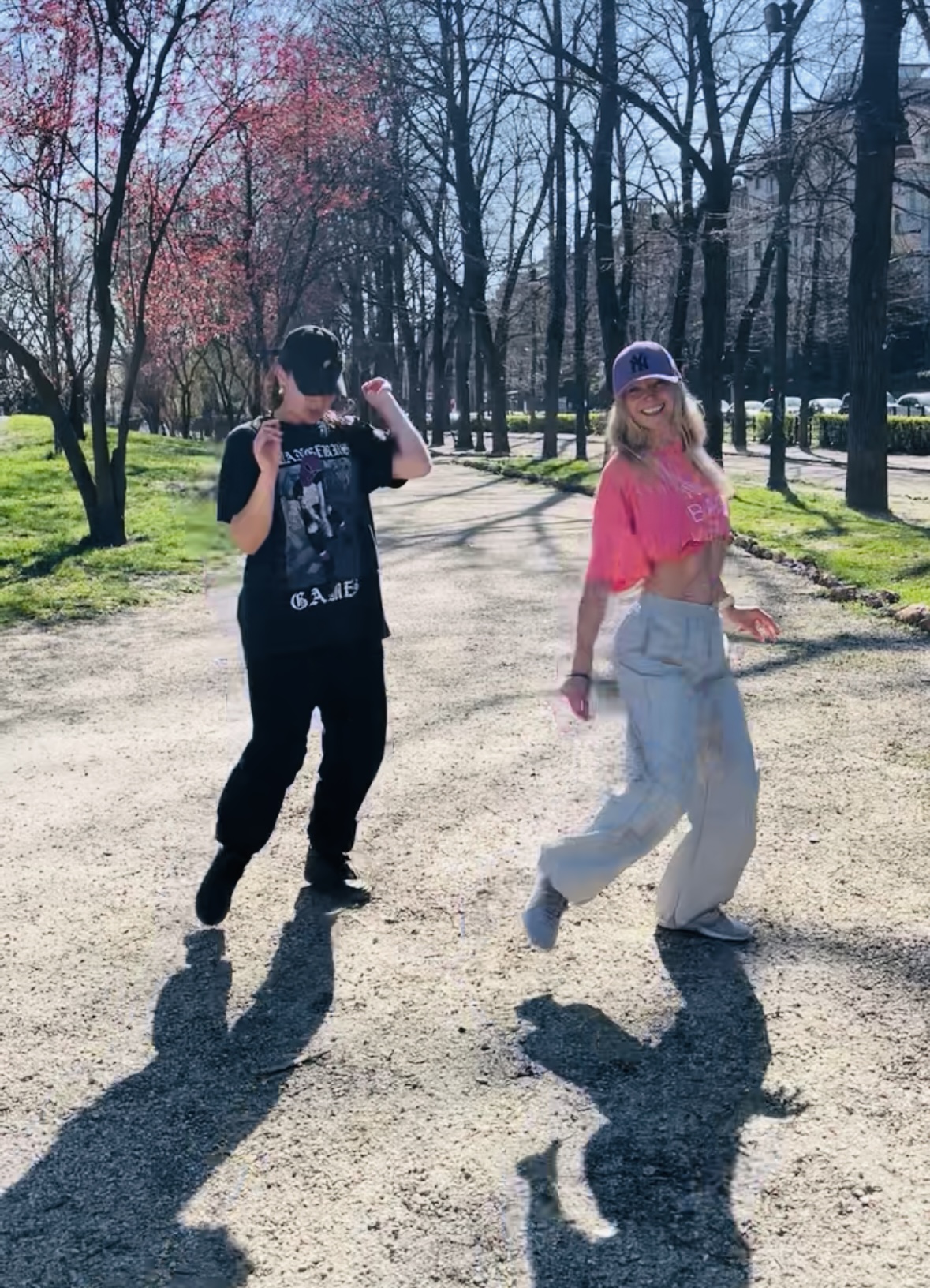
Dance vocabulary
Use these words when you describe your own work and when you give feedback to others.
- Choreography
- The set order of movements that make up a dance.
- Phrase
- A short sequence of movements, like a sentence in a dance.
- Count of 8
- The way dancers count music — most routines are built in 8s.
- Tempo
- The speed of the music or of the movement.
- Dynamics
- How a movement is done: sharp, smooth, heavy, light, sudden.
- Levels
- High, medium and low space used by the body.
- Formation
- The shape a group makes in the space (line, V, diagonal, circle).
- Unison
- Everyone performing the same movement at the same time.
- Canon
- The same movement performed one after another, like a wave.
- Isolation
- Moving one body part on its own — head, ribs, shoulders, hips.
- Projection
- Sending energy and focus out to the audience.
- Musicality
- Matching your movement to the rhythm, accents and mood of the music.
Moves vocabulary
Steps and actions you will use, describe and combine in this unit.
- Bounce
- A repeated downward and upward pulse through the knees and hips — the groove in hip hop.
- Hop
- Take off and land on the same foot.
- Jump
- Take off from two feet and land on two feet.
- Kick
- A sharp leg extension from the hip, foot flexed or pointed depending on style.
- Bart Simpson
- A hip hop step where you slide one foot out and lean the opposite way, like the cartoon character.
- Kick ball change
- A quick triple step: kick one foot, step on the ball of the same foot, then transfer weight to the other foot.
- Chassé
- A chasing step: one foot slides, the other closes to meet it, usually with a small spring.
- Relevé
- Rising onto the balls of the feet from a plié.
- Plié
- Bending the knees while keeping the heels on the floor (demi) or lifting them (grand).
- Turn
- A controlled rotation on one or both feet, keeping the eyes focused on one spot (spotting).
- Spin
- A faster, continuous rotation, often with the body more relaxed.
- Pivot
- A half or full turn on the ball of one foot while the other foot stays in place or swivels.
- Close
- Bringing one foot next to the other, usually with weight transfer.
- Slide
- Gliding one foot smoothly along the floor while the body travels sideways.
- Susie Q
- A jazz and hip hop step where the feet twist back and forth while the body sways.
- Mambo
- A Latin step pattern: forward, replace, back, hold — used in salsa and mambo music.
- Tap
- Striking the floor with the ball or heel of the foot to make a sound or mark a beat.
Two styles to know
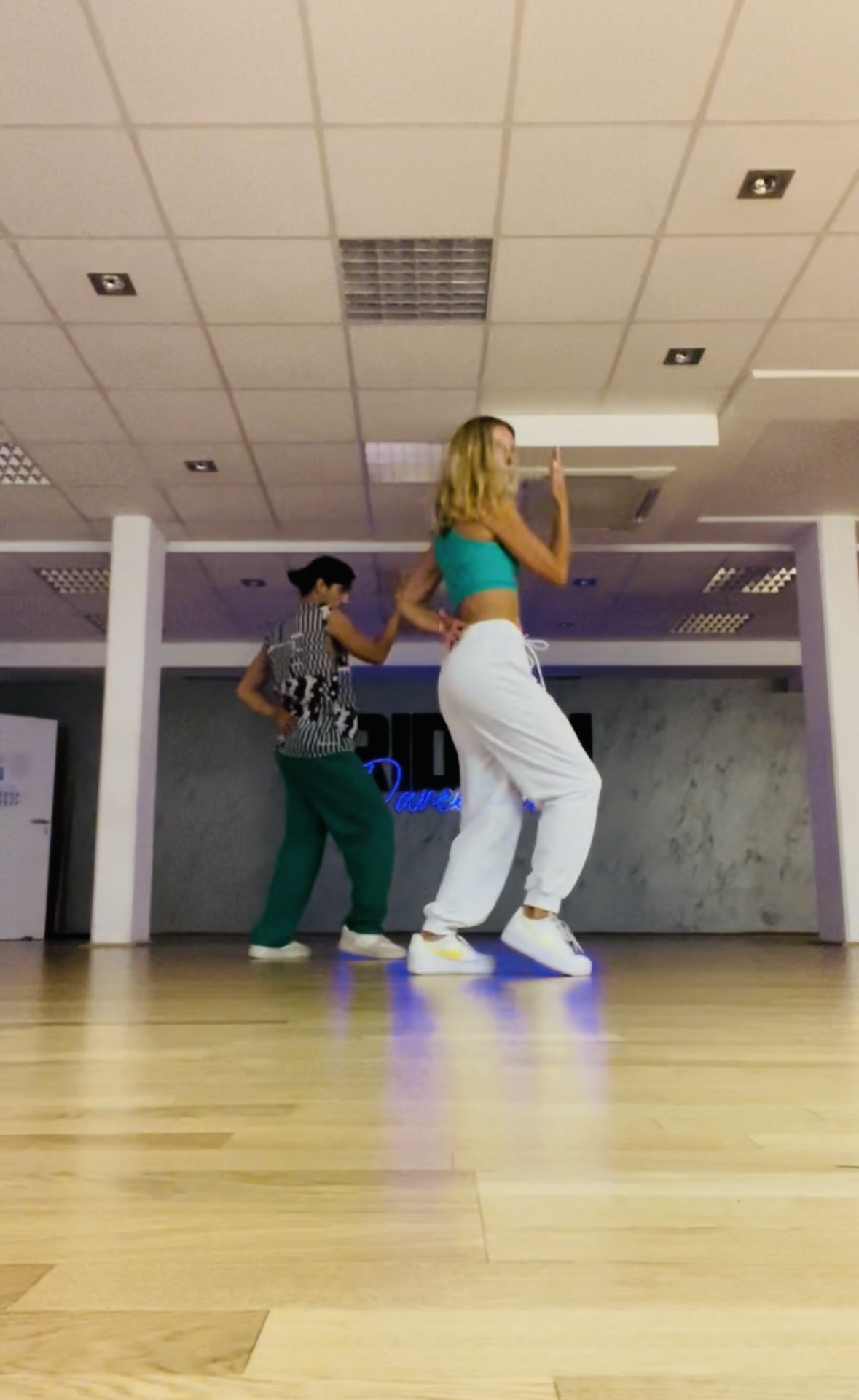
The Bronx, New York — early 1970s
Hip Hop
Born at block parties where DJs looped the breaks of funk records and dancers filled the gap. Hip hop dance grew out of the culture alongside DJing, MCing and graffiti. Styles include breaking, popping, locking and newer commercial 'new style'.
How it feels: Grounded, bouncy and sharp. The key is the bounce (the groove) — knees soft, weight low, chest and shoulders alive.
Listen for: Look for the beat and the accents. Hip hop hits the strong beats hard and plays with the gaps.
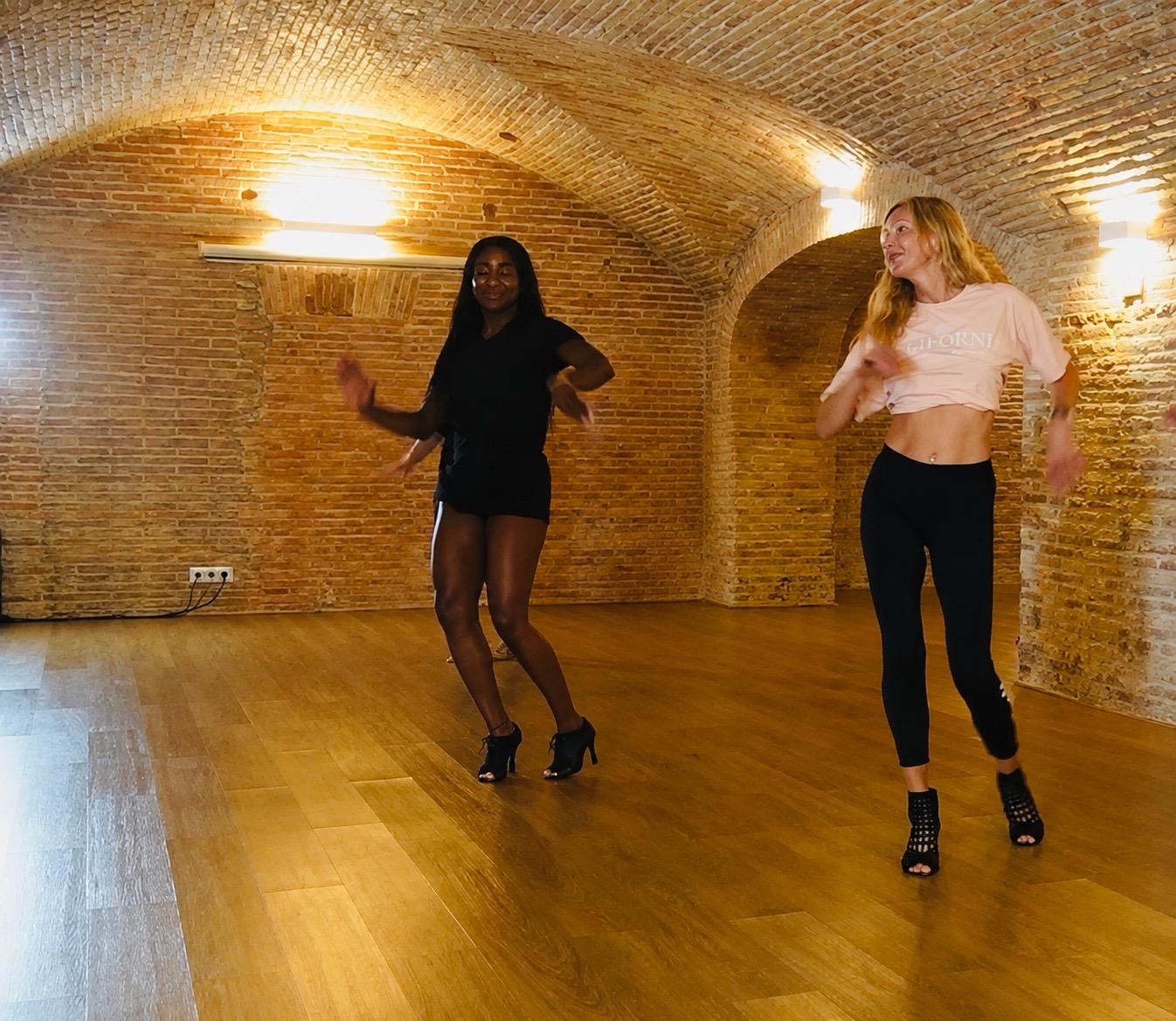
Cuba and Puerto Rico, then New York — 1960s–70s
Salsa
Salsa mixes Cuban son and mambo with jazz and Caribbean rhythms. It is a partner dance built on a quick-quick-slow step over eight counts, danced socially all over the world — including here in Barcelona.
How it feels: Upright, light and quick, with the weight staying over the ball of the foot and hips moving because the knees bend, not because you push them.
Listen for: Count 1-2-3, pause, 5-6-7, pause. The clave rhythm underneath is your map.
Performing & training
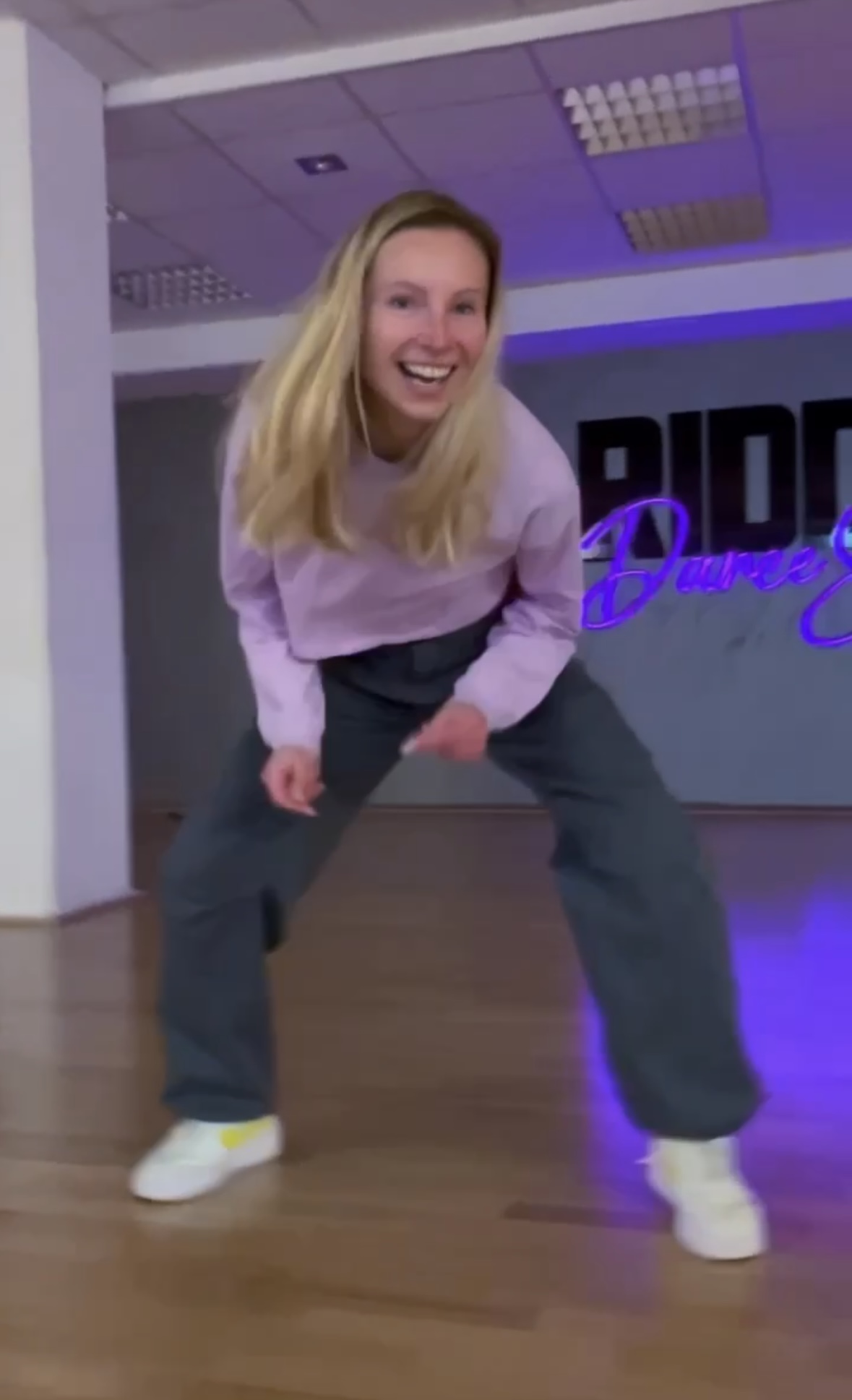
Full out vs marking
Marking means dancing at low energy to remember the order — small arms, walking the steps, saving the body. Full out means performing at 100%: full size, full speed, full expression. Mark to learn, full out to rehearse. If you only ever mark, your body will not know what performance feels like.
How to perform
Face out, lift the chest, find a focus point above the audience's heads. Finish every movement — the ending of a move is what people see. Smile or commit to the character of the piece, and if you make a mistake, keep going. Confidence is a skill you practise, not something you are born with.
How to train for dance
Warm up the spine, hips and ankles. Build strength in the legs and core so you can control landings, and mobility so you can reach full range. Repeat phrases slowly with correct technique before speeding up, and use a mirror or a video of yourself — the camera is honest.
Working together
Agree on counts out loud before you run it. Watch your peripheral vision to stay in unison, keep your spacing even, and give feedback that is specific and kind: name the count, name the fix. Everyone contributes at least one idea to the choreography.
Creative challenges
- Take a everyday action (tying laces, checking your phone) and turn it into an 8-count phrase using three different levels.
- Choose one 8-count and perform it three ways: sharp, smooth, and in slow motion. Which dynamic tells the best story?
- Build a 16-count group phrase that uses unison for the first 8 and canon for the second 8.
- Find a song you love and clap the counts of 8 through the chorus — then map one move to each accent.
Entry quiz
General knowledge to start the unit. Read the explanations — they are part of the lesson.
Unit 1 · Dance general knowledge
1 / 8Most dance routines are counted in groups of…